
UK Online Slots Market Hits New Heights Despite Stake Caps: Q3 2025 Data Reveals £788M GGY Surge and Safer Play Trends
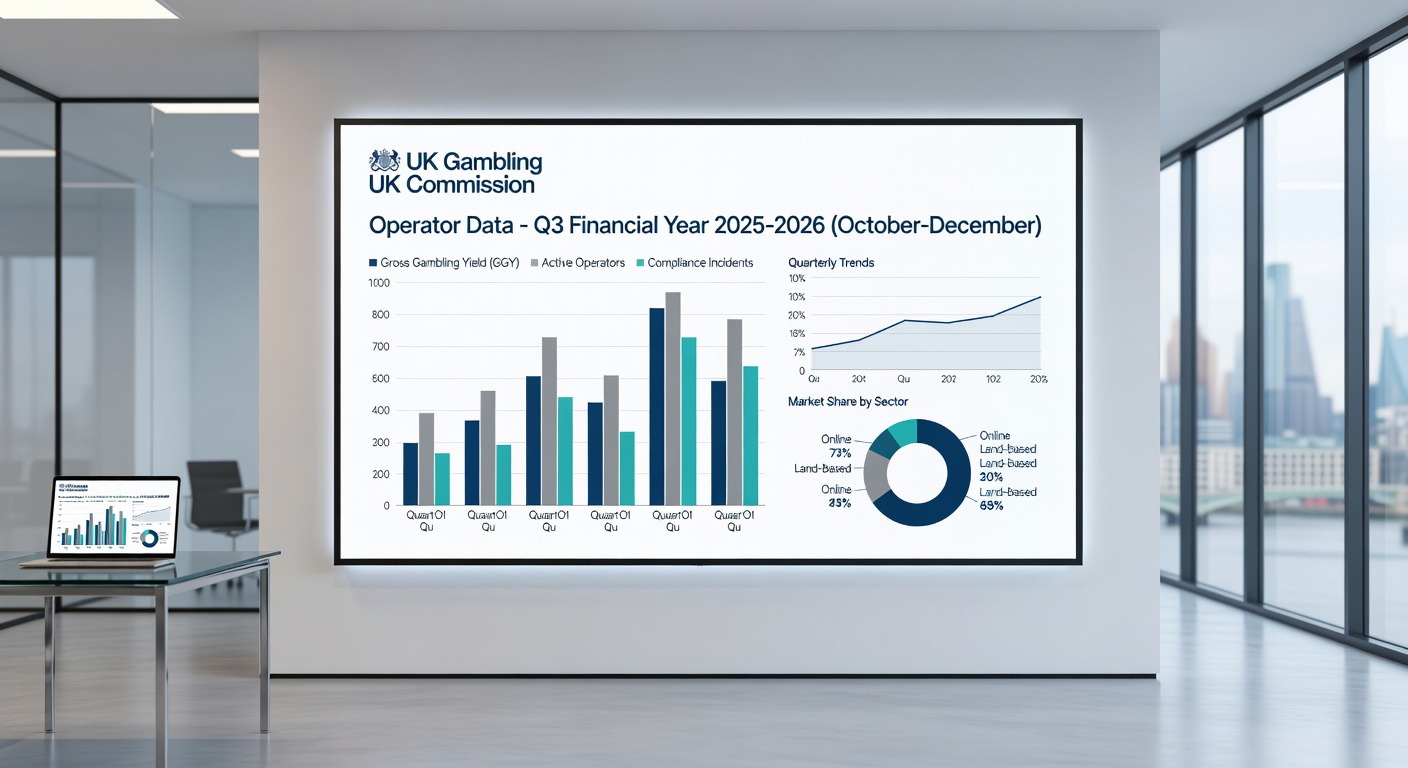
Recent figures from the UK Gambling Commission paint a striking picture of the online slots sector in the final quarter of 2025, showing how the market adapted to fresh regulatory curbs while pushing boundaries on revenue and activity; data covering October to December—Q3 of the 2025-2026 financial year—marks the first full period after maximum stake limits kicked in, yet Gross Gambling Yield (GGY) climbed 10% year-on-year to a record £788 million, spins totaled 25.7 billion (up 7%), and average monthly active accounts reached 4.6 million (a 5% gain), all while safer gambling metrics improved noticeably.
Observers tracking the industry note these numbers arrive amid ongoing scrutiny in early 2026, with the report dropping in February and analysts poring over implications as March unfolds; that's the reality for operators navigating a landscape where player engagement holds steady—or even ramps up—despite tighter controls on bets per spin.
Stake Limits Enter the Scene: A Quick Recap of the Changes
The rules shifted dramatically in spring 2025, when £5 maximum stakes per spin rolled out for players aged 25 and over starting April, followed by £2 caps for 18- to 24-year-olds from May; these measures, aimed at curbing potential harm especially among younger users, reshaped how slots play out on digital platforms, forcing adjustments in game design, promotions, and even reel speeds to keep sessions flowing without crossing lines.
But here's the thing: while some predicted a sharp downturn in activity, the Q3 data tells a different story, with total spins not just holding ground but expanding, suggesting players spread bets thinner across more turns or gravitated toward lower-volatility titles that stretch playtime; experts who follow these trends point out that GGY—the net win for operators after payouts—hitting £788 million underscores resilience, as higher volume offset per-spin restrictions effectively.
Take one operator analyst who reviewed early post-limit pilots: they observed sessions fragmenting into quicker hits, which aligns perfectly with the commission's findings on behavior; and now, with full-quarter stats in hand, the pattern solidifies, proving the market's knack for adaptation when the stakes—pun somewhat intended—get recalibrated.
Breaking Down the Key Metrics: Peaks All Around
Diving into the numbers, online slots GGY soared to £788 million for the quarter, eclipsing the prior year's mark by a solid 10%, while the sheer volume of spins reached 25.7 billion, a 7% jump that signals sustained if not heightened player interest; average monthly active accounts ticked up 5% to 4.6 million, another all-time high, meaning more people logged in regularly despite the caps, perhaps chasing jackpots or bonuses that operators tweaked to fit new realities.
What's interesting here lies in the peaks: both GGY and spins set fresh records, even as March 2026 brings fresh eyes to whether this momentum carries into Q4; data from the Gambling business data report highlights how these gains stack up against pre-limit expectations, where forecasts leaned toward contraction but reality delivered expansion instead.
And consider the arithmetic: with stakes capped, that 25.7 billion spins figure implies finer-grained wagering, yet operators pocketed more overall, a dynamic researchers attribute to broader participation and stickier engagement tools like loyalty perks or themed slots that keep reels turning; people who've studied quarterly evolutions often discover such counterintuitive booms follow regulatory tweaks, and this quarter fits the bill neatly.
Safer Gambling Lights Up: Sessions Shorten, Long Hauls Drop
Alongside the revenue highs, positive safer gambling signals emerged prominently, as sessions lasting over one hour plunged 16% to 8.9 million, and average session length shrank to 16 minutes; these shifts, tracked meticulously by the commission, suggest the stake limits nudged behavior toward brevity, potentially reducing immersion risks that regulators targeted all along.
Turns out, shorter bursts correlate with controlled spending in many studies, and here the data backs it: fewer marathon plays mean less exposure time, even as total spins climbed, because players cycled through more rapid, lower-stake interactions; observers note this balance—higher activity volume paired with moderated durations—marks a win for harm-minimization goals without tanking the sector.
One case researchers highlight involves similar caps in other markets, where session metrics improved analogously, yet activity rebounded quickly; the UK pattern mirrors that, with 4.6 million active accounts underscoring broad access while safeguards click into place, and as March 2026 monitoring continues, these trends could inform tweaks to age-based limits or enforcement.
Year-on-Year Shifts and What They Signal for Operators
Comparing directly to Q3 2024, the 10% GGY uplift to £788 million stands out, fueled by that 7% spin increase amid 5% more active users; figures reveal operators leaned into high-RTP games or multi-line setups that maximize fun within bounds, keeping yield robust since GGY factors in all wins and losses netted out.
Yet the rubber meets the road in player retention: with accounts at peak 4.6 million monthly averages, platforms clearly retained—and grew—their base, perhaps via no-deposit bonuses or stake-aware demos that ease transitions; that's where patterns from prior quarters shine through, as early 2025 dips stabilized into this growth phase, proving adaptability pays off.
Experts who've dissected commission releases over years often spot these pivots—when limits land, initial hesitation gives way to optimized play—and Q3 2025 exemplifies it, with spins at 25.7 billion showing no slowdown in enthusiasm; now, heading into late winter 2026, the question lingers on sustainability, but the data lays a strong foundation.
It's noteworthy how these metrics interplay: more accounts drive spins, which bolster GGY, all while safer indicators greenlight the trajectory; people monitoring from afar, including in March's fresh analyses, recognize this as a nuanced equilibrium, not a simple boom or bust.
Industry Ripples and Forward Glances
Operators faced the limits head-on, rolling out compliant slots swiftly—think lower default bets with easy ramps—and the results speak volumes, as 8.9 million sub-hour sessions (post-16% drop in longs) pair with record activity; this isn't rocket science, but strategic pivots like enhanced self-exclusion tools or spend trackers amplified the positives.
So what might March 2026 reveal next? Commission updates could probe Q4 preliminaries, testing if holiday spins sustain the 25.7 billion pace or if youth-focused £2 caps reshape demographics further; researchers anticipate steady GGY around £788 million territory, given the active account surge to 4.6 million, but with eyes on volatility from progressive pots or live dealer hybrids skirting pure slots rules.
There's this case from Australian trials, where stake curbs yielded similar session shrinks and yield holds, offering a blueprint; UK stakeholders draw parallels, noting how 16-minute averages curb fatigue while volume thrives, and the writing's on the wall for balanced growth if trends hold.
Conclusion
The UK Gambling Commission's Q3 2025 operator data crystallizes a market thriving under stake limits—£788 million GGY up 10%, 25.7 billion spins up 7%, 4.6 million active accounts up 5%, alongside safer play via 16% fewer long sessions and 16-minute averages—proving regulation and revenue can coexist dynamically; as February's release fuels March 2026 discussions, these benchmarks set the stage for vigilant evolution, with operators and watchdogs alike eyeing sustained balance in the slots arena.
In the end, the figures don't lie: adaptation wins